


Izumi's Materiality
Materiality identification
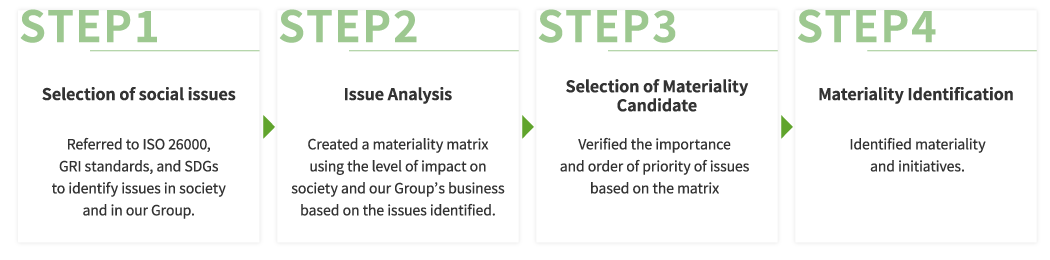
In 2021, we identified issues both in society and in our business activities. Considering the degree of importance of each issue, we created a materiality matrix and identified the issues we will tackle as a priority. We also reorganized our materiality in FY2026, to coincide with the formulation of our third medium-term management plan, based on a reassessment of the content, scope and degree of importance of activities for each materiality.
Purpose of review of priority issues
・To adapt to changes in our business, relevant stakeholders and diversifying social issues ・To reevaluate priority issues for improved corporate value over the medium and long term, to coincide with formulation of our third medium-term management plan ・To promote sustainability management and information disclosure in compliance with international guidelines
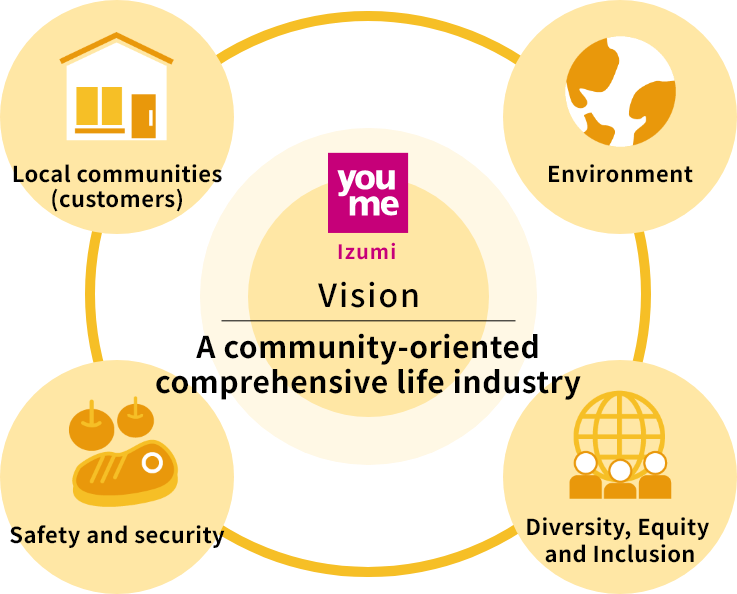
As a result of the review, our four material issues (Local communities and customers, Environment, Safety and security, and Diversity, Equity and Inclusion) will remain unchanged and we will build on our initiatives to date aiming to further develop a community-based "comprehensive lifestyle industry." In addition, the identified materiality will be incorporated into management through the deliberations of the Sustainability Committee and the approval and supervision of the Board of Directors and will be reviewed periodically in light of changes in society and the business environment.
Materiality Identification Progress
To create a better future for the next generation, the Izumi Group established the Sustainability Committee, a companywide organization chaired by the President and Representative Director, and extracted and identified materiality (material issues) in response to changes in the social environment.
Materiality Matrix
As shown below, we created a matrix by mapping the extracted issues along two evaluation axes: Importance for society and Importance for Izumi.
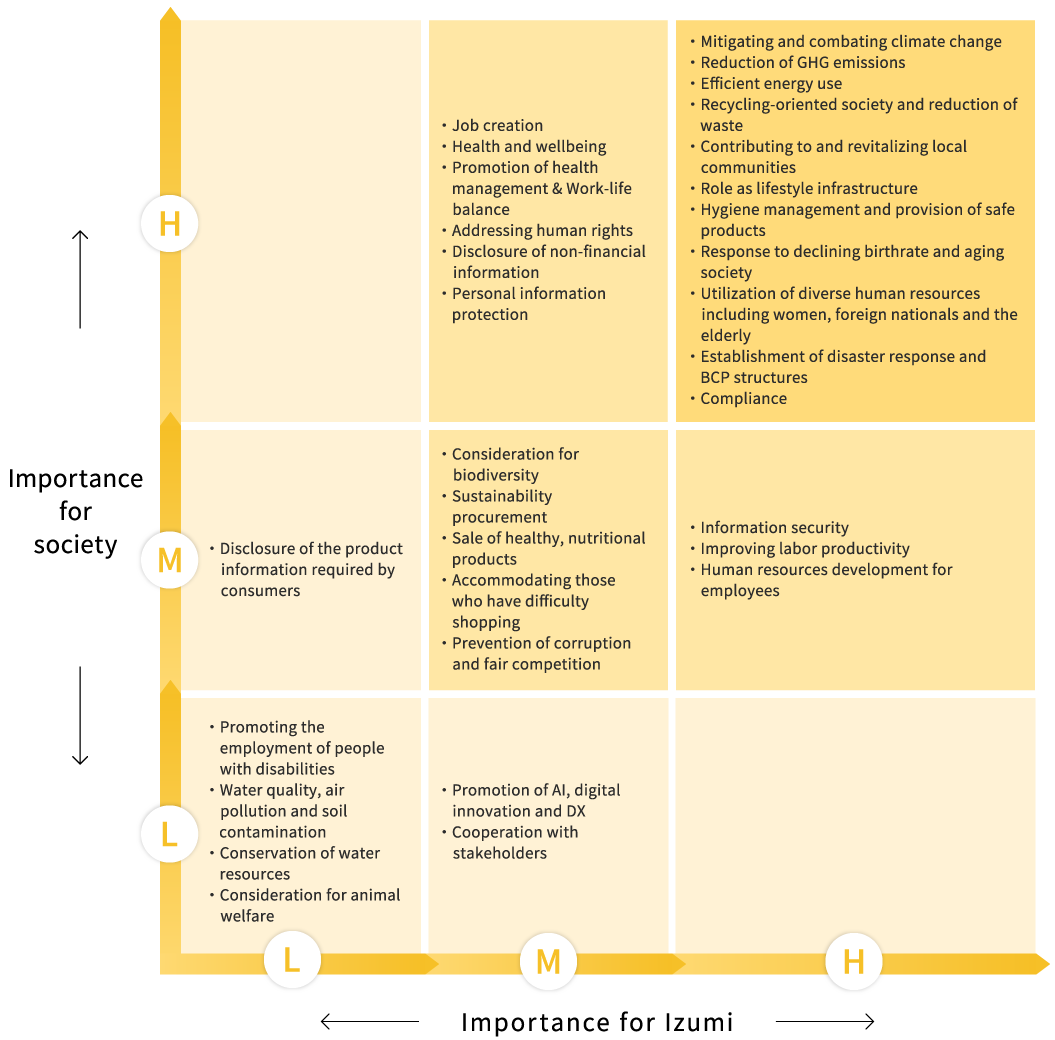
H (High), M (Medium), L (Low)
Initiatives to address materiality (material issues)
By organizing the issues in the materiality matrix based on our management philosophy and business activities, we identified four material issues (materiality).
| Business Strategy | Materiality | Initiatives | |
|---|---|---|---|
|
(i) Be closer to customers in the local community than anyone else |
|||
| Local communities and customers |
Creating enriched lives together with local communities and customers | Providing products and services for diverse customers and developing convenient ways of shopping | |
| Providing places and opportunities for customers in local communities gather | |||
| Revitalizing local communities and responding to disasters through comprehensive agreements and collaboration with local governments | |||
| Environment | Achieving a decarbonized society and efficiently using resources | Reduction of CO2 emissions, energy measures | |
| Reduction of waste generated by stores | |||
| Reduction of plastic containers and packing | |||
| Effective resource use | |||
| Safety and security |
Creating value by providing safety and security, and through products and services | Through hygiene management | |
| Handling and appropriately labelling health-conscious and allergen-free products | |||
| Sustainable procurement of marine and agricultural products Providing environmentally friendly products |
|||
| Diversity, Equity and Inclusion |
Creating an environment where diverse human resources can thrive | Promoting the career advancement of women, and increasing the ratio of women in managerial positions | |
| Supporting the active participation of young people, the elderly, foreign nationals, and people with disabilities | |||
| Creation of a working environment that suits different life stages | |||
Conceptual image of materiality (material issues)
Initiative-specific policies(Japanese)
Long-term vision
In line with our 2050 vision "youme MIRAI (future) Action," we established numerical targets and also determined matters to be tackled.

| Vision | Specific initiatives | 2030 targets | 2050 vision |
|---|---|---|---|
| A Decarbonized Society | Reduction of CO2 emissions |
|
|
|
|||
| A Recycling-Oriented Society | Action on plastics |
|
|
| Measures for food loss and food recycling |
|
|
|
|
|
||
| A Society in Harmony with Nature | Protection of biodiversity |
|
|